Built for Coachella Valley luxury STR owners

Palm Springs cost segregation,
federal + California Year-1 built in.

Palm Springs, Palm Desert, La Quinta, Rancho Mirage, Indian Wells, Cathedral City, Desert Hot Springs, Indio — most Coachella Valley STR owners save $40K–$160K Year-1 federal. California decouples from §168(k), so CA Year-1 is smaller upfront and accrues over the recovery period via parallel Schedule CA D-1. Mid-century architecture, pool-heavy lots, and the festival economy (Coachella, Stagecoach, BNP Paribas Open, Modernism Week) drive premium FF&E density — $50K–$200K per property — that lands as 5-year personal property under MACRS. 30-second estimate, no signup.

✓ 60-day money-back guarantee ✓ Engineer sign-off ✓ IRS ATG aligned

Reviewed by Cost Seg Smart Editorial Team · Last reviewed: · Methodology: IRS Pub. 5653, Rev. Proc. 87-56, what is cost segregation?

Estimate (live) Updates as you type
$750K

Over $3M? Email us for a custom quote.

Property type
Estimated Year-1 federal savings
$0
on $0 of accelerated deductions
+ ~$0 CA state Year-1 (decoupled — see note)
CA state benefit accrues over Years 1-15 instead of upfront. How the CA math works →
Get the full study at costsegsmart.com → starting at $495

Estimate is illustrative. Final number is engineered to your specific property and reviewed by a licensed engineer.

$58,000
Median Year-1 federal savings for Coachella Valley STR owners on a $750K basis (100% bonus, 37% bracket, illustrative).
< 1 hr
Typical study turnaround at Cost Seg Smart.
$795
Studies start at $495 for sub-$300K properties. Most Coachella Valley STRs land in the $795 tier.

If your Palm Springs property is over $200K basis and held for 12+ months, you can run the full study at costsegsmart.com — typically delivered in under an hour, starting at $495. Order at Cost Seg Smart →

Why Coachella Valley is different

Five local factors define Palm Springs cost-seg math.

The Coachella Valley is a luxury STR market with architectural premiums, pool-heavy lots, a structural festival economy, city-by-city permit caps, and California §168(k) decoupling. Each one moves the numbers in a specific direction.

Mid-century modern restoration premium

Palm Springs' MCM neighborhoods (Twin Palms, Sunmor, Vista Las Palmas, Deepwell) carry architectural finish premiums that pull total construction cost up. Reclass percentages stay 27-29%, but on a higher denominator — bigger raw 5/7/15-year dollar numbers per property.

Pool, spa, and landscape density

Coachella Valley properties carry 2-3× the pool/spa/hardscape value of comparable inland markets. Pool equipment, decking, spa systems, landscape lighting, and irrigation all land in 15-year property — adding meaningful 15-year reclass on top of the 5-year FF&E base.

Festival-economy FF&E density

Coachella, Stagecoach, BNP Paribas Open, Palm Springs Film Festival, and Modernism Week drive ADRs to 3-8× off-peak rates. Owners furnish accordingly — designer pieces, high-end appliances, smart-home tech — and that FF&E investment ($50K-$200K per property) shows up as 5-year property in the study.

STR permit caps city-by-city

Palm Springs caps STR permits at ~20% of single-family homes per neighborhood (Vacation Rental Ordinance). Cathedral City prohibited new STR permits in residential zones in 2022. La Quinta, Rancho Mirage, Indian Wells, Palm Desert all restrict. Permitted properties trade 10-20% above unpermitted comparables — scarcity that compounds with cost-seg benefits.

California §168(k) decoupling — federal benefit still strong, state benefit stretched

CA does not allow federal §168(k) bonus depreciation on the state return (per CA R&T Code §17250 + §24349). Federal Year-1 deduction is large (100% × reclassified × your federal bracket). California Year-1 is small — the same reclassified portion depreciates MACRS straight-line on a parallel Schedule CA D-1, producing ~1.9% of reclassified at top CA bracket. Over the recovery period, the total CA benefit catches up. Net: federal headline stays massive; CA stretches over Years 1-15. Operational cost: parallel-schedule tracking handled by your CPA. Cost Seg Smart studies include both federal and CA-compatible schedules as standard.

What it actually looks like

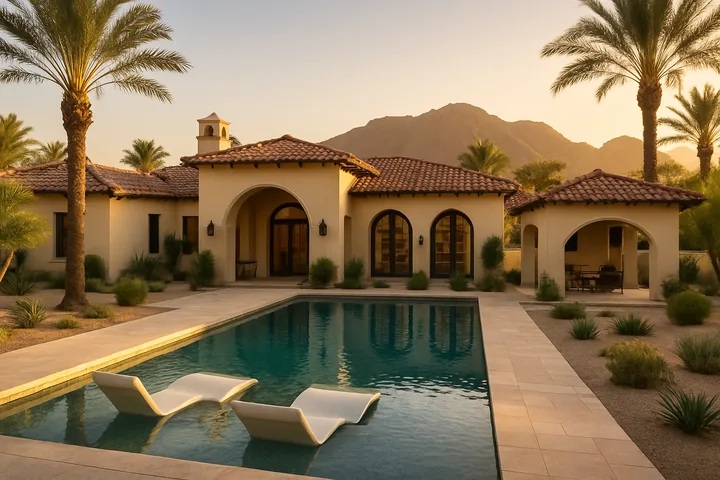
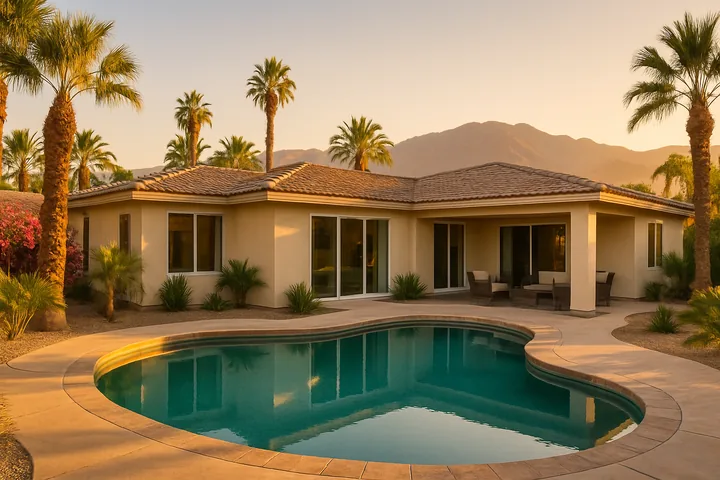
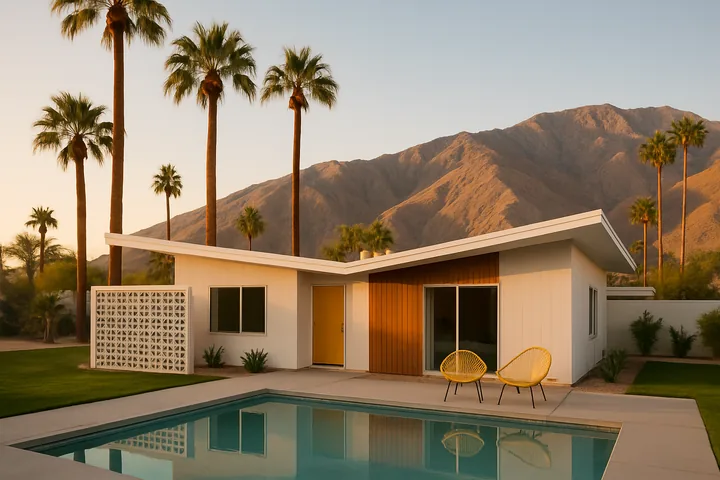
Three Coachella Valley properties — STR + luxury estate.

Engine-truth outputs. 2025 placed-in-service, 100% bonus depreciation under OBBBA, 37% federal bracket. CA state Year-1 shown separately — accrues over 5/7/15 years on Schedule CA D-1.

How we calculate Palm Springs numbers

RSMeans 2024 + Riverside County Assessor + CA parallel schedules.

RSMeans 2024 cost data with Coachella Valley regional multipliers, Riverside County Assessor records for land allocation, the IRS Cost Segregation Audit Techniques Guide methodology for federal classification, AND CA Schedule CA D-1 (assets) parallel depreciation schedule for California compliance. Every Cost Seg Smart California study ships both federal and CA-compatible schedules as standard. An engineer reviews and signs off before delivery.

Full methodology details →
  • IRS ATG Aligned
    Mirrors Publication 5653
  • CA Parallel Schedules
    Schedule CA D-1 included as standard
  • Engineer Sign-Off
    Every study, no exceptions
  • 60-day money-back
    If your CPA can't use the report
Questions

Coachella Valley-specific things people ask.

How does California §168(k) decoupling affect Palm Springs investors?

California decouples from federal §168(k) per CA R&T Code §17250 + §24349. You take 100% federal bonus depreciation Year 1, but for CA state tax the same components depreciate on MACRS straight-line on a parallel Schedule CA D-1 (Assets). Year-1 CA benefit is small (~1.9% of reclassified at top CA bracket — typically $3K-$10K on a CV STR), but total state benefit catches up over the recovery period. All Cost Seg Smart California studies include both federal and CA parallel schedules at no extra cost.

Is Palm Springs STR-permit-restricted?

Yes, in most Coachella Valley cities. Palm Springs caps STR permits at ~20% of single-family homes per neighborhood (Vacation Rental Ordinance). Cathedral City prohibits new STR permits in residential zones since 2022 — only legacy permits transfer. Rancho Mirage, La Quinta, and Indian Wells limit STRs in many residential zones. Permitted STR properties trade 10-20% above unpermitted comparables.

What about Palm Desert, La Quinta, and Indian Wells?

Same methodology and pricing for all eight Coachella Valley cities. Land allocation ratios shift meaningfully between cities (Indian Wells ~32% land, Palm Springs ~28%, Palm Desert ~24%, La Quinta ~22%, Indio ~16%, Desert Hot Springs ~14%). Higher land allocation = lower depreciable basis = smaller reclass dollar number, but the percentage stays comparable. Our engine handles all of these automatically.

Does Coachella + festivals affect my reclassification?

Festival weeks (Coachella, Stagecoach, BNP Paribas Open, Palm Springs Film Festival, Modernism Week) drive ADRs to 3-8× off-peak rates and produce 30-50% of annual STR revenue for many properties. That doesn't change cost-seg reclass directly, but it explains why CV owners have high FF&E density (premium furnishings, design-grade interiors, pool/spa upgrades) — which DOES drive a higher reclass percentage than a vanilla SFR rental.

What's typical Year-1 federal savings for a Palm Springs STR owner?

Median Year-1 federal savings for a CV STR investor in the 37% bracket: ~$58,000 on a $750K basis property. Mid-century restorations and design-destination estates over $1.5M frequently produce $120K-$220K federal Year-1 deductions, with CA Schedule CA D-1 Year-1 catching another $5K-$10K and accumulating across years 2-15.

How does this compare to Joshua Tree or Phoenix?

Methodology is identical. Differences: (a) CV FF&E density is higher than Joshua Tree (more luxury, designer pieces) — pushes reclass higher. (b) Pool/landscape density is much higher than Phoenix or JT — adds 15-year property. (c) CA §168(k) decoupling means Year-1 state benefit is smaller than AZ or TX (clean conformity), but the federal headline is identical at 100% bonus. Net: similar reclass percentages, similar federal Year-1, lower Year-1 state benefit, similar total benefit over time.

Can I cost seg a property I'm converting from primary residence to STR?

Yes, on the rental portion only. Conversion date establishes the basis — typically the lower of original cost basis or fair market value at conversion. If you're converting the entire property, full basis applies. If you're keeping part as primary residence (e.g., a casita STR while you live in the main house), an engineer scopes the rental-portion basis allocation.

I'm doing a 1031 exchange — what's the cleanest move?

CA-to-CA 1031s are simplest — your parallel CA schedule continues on the new property. CA-to-out-of-state: CA tracking continues on the relinquished CA basis until eventual disposition; new (non-CA) property gets clean §168(k) federal treatment. Out-of-state-to-Palm-Springs: fresh CA tracking starts on the new property. Your CPA handles the parallel-schedule mechanics — lean on a CPA who specifically knows California depreciation rules.
Have a question we didn't cover? Email [email protected] or see the full FAQ at Cost Seg Smart →

Ready to see your number?

Order your Palm Springs study —
under 1 hour, starting at $495.

Palm Springs, Palm Desert, La Quinta, Rancho Mirage, Indian Wells, Cathedral City, Desert Hot Springs, Indio — we generate the engineered PDF with both federal and California-compatible depreciation schedules, an engineer signs off, your CPA files. Studies start at $495; most Coachella Valley STRs land in the $795 tier.

60-day money-back guarantee · CPA-Ready · Engineer signs every study · CA parallel schedules included